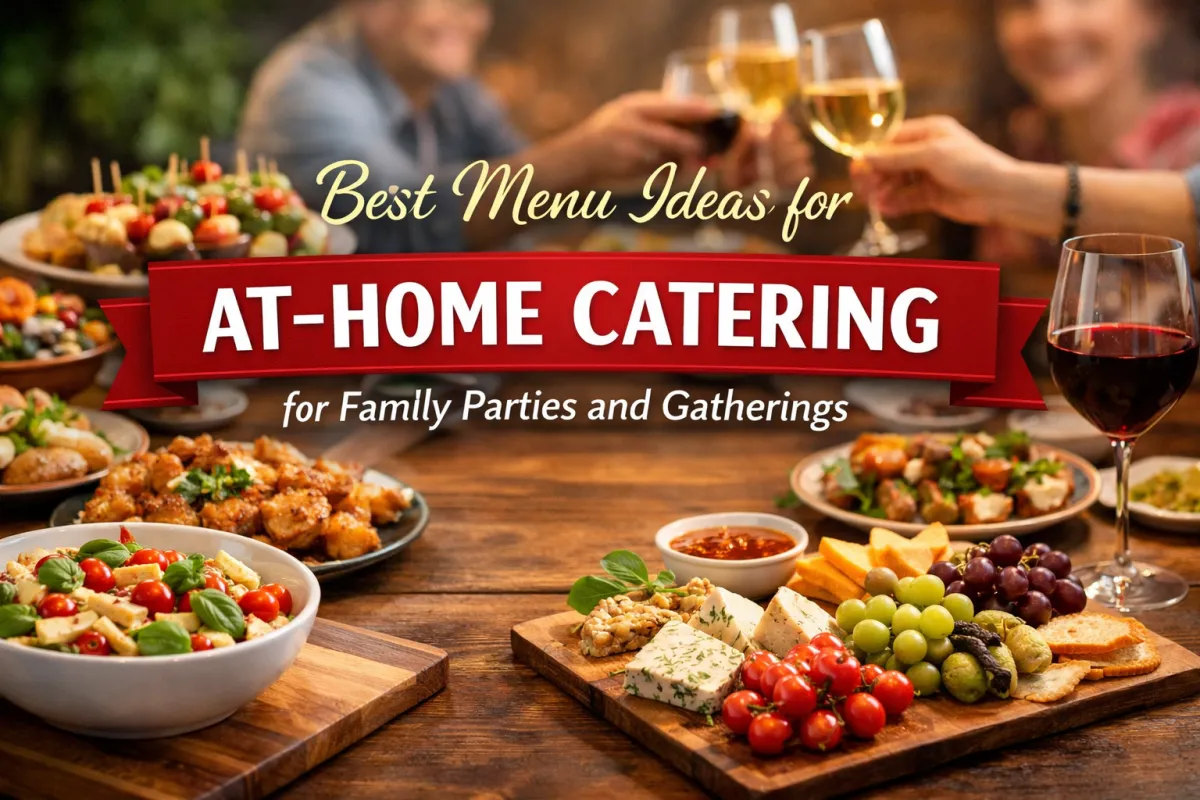
Best Menu Ideas for At-Home Catering for Family Parties and Gatherings
At-home catering menus should be designed for comfort, sharing, and easy service. Unlike restaurant events or banquet halls, home gatherings require food that works in smaller spaces and allows guests to eat casually while enjoying time together.
The best menus balance three things:
• Food that is easy to serve
• Food that appeals to many guests
• Food that fits the style of the event
This guide explains the most popular at-home catering menu ideas and what each option means for a home-based celebration.
Popular At-Home Catering Menu Styles (Explained)
Family-Style Meals
Family-style catering means large serving platters of food are placed on tables and guests pass dishes around and serve themselves.
This style:
• Feels similar to a home-cooked meal
• Encourages conversation and connection
• Creates a warm and welcoming atmosphere
• Works best when guests are seated together
Family-style menus are ideal for:
• Dinner parties
• Holiday meals
• Small to medium family gatherings
Common foods include pasta dishes, roasted chicken, vegetables, and shared salads.
Buffet Menus
Buffet catering means food is arranged on one or more tables so guests can walk up and serve themselves.
This style:
• Allows guests to choose their own portions
• Makes it easier to handle dietary preferences
• Works well for larger groups
• Keeps the event flexible and informal
Buffet menus are ideal for:
• Birthday parties
• Backyard gatherings
• Mixed-age groups
They often include several main dishes, side dishes, and salads so guests can build their own plate.
Cocktail-Style Menus
Cocktail-style catering focuses on small plates and appetizers rather than a full seated meal. Guests eat while standing or moving around the home.
This style:
• Encourages mingling and conversation
• Does not require formal seating
• Works well for shorter events
• Creates a modern, relaxed atmosphere
Cocktail-style menus are ideal for:
• Adult birthday parties
• Engagement celebrations
• Evening social gatherings
Foods are designed to be eaten easily without needing a full table setup.
Common Menu Categories Explained
Appetizers
Appetizers are small starter dishes served at the beginning of the event. Their purpose is to welcome guests and give them something to enjoy while socializing.
Appetizers work well because they:
• Are easy to eat in small portions
• Do not require full plates
• Keep guests satisfied while the main meal is prepared
Examples include small bites, bread, dips, or vegetable platters.
Main Dishes
Main dishes are the core of the meal. These provide the most filling part of the menu and should appeal to a wide range of tastes.
For at-home catering, main dishes should be:
• Easy to serve from trays or platters
• Not messy to eat
• Comfortable to eat while seated or standing
Popular main dishes include pasta, chicken, seafood, and vegetarian options.
Side Dishes
Side dishes support the main dishes and add balance to the menu.
They often include:
• Vegetables
• Rice or potatoes
• Salads
Side dishes help ensure that guests who do not eat certain proteins still have a full meal.
Desserts
Desserts provide a sweet ending to the gathering without competing with the main event.
At-home catering desserts are usually:
• Simple and easy to serve
• Portion-controlled
• Not overly formal
Examples include cookies, pastries, or a small cake for sharing.
Dietary and Guest Needs
When planning an at-home catering menu, it is important to consider guest preferences and restrictions.
Guests with Dietary Preferences
Vegetarian guests or those needing select accommodations should be considered in advance. Providing at least one plant-based option helps ensure all guests can enjoy the meal.
Food Allergies or Sensitivities
Some guests may require gluten-free or nut-free dishes. Planning for this in advance avoids last-minute stress.
Cultural or Religious Preferences
Menus can be adjusted to reflect family traditions or dietary rules. Clear labeling of dishes helps guests feel comfortable choosing their food.
Beverage Options Explained
Beverages are part of the menu experience and can be simple or more festive depending on the event.
Non-Alcoholic Beverages
Water, soda, coffee, and tea are appropriate for all ages and all types of gatherings.
Beer and Wine
A popular option for adult parties that feels celebratory without being overly formal.
Specialty Drinks
Cocktails or mocktails may be added for themed events or milestone celebrations.
Beverage choices affect both cost and atmosphere.
Choosing the Right Menu for Your Home
The best menu depends on several practical factors:
Space Available
Smaller homes may need simpler menus and fewer serving stations.
Guest Count
Larger groups benefit from buffet or cocktail-style menus that prevent crowding.
Event Length
Shorter events may only require appetizers, while longer gatherings need full meals.
Budget
Family-style and buffet menus are often more affordable than plated service.
Kitchen Access
Some homes do not have space for reheating or plating food, so menus must be prepared accordingly.
A catering partner can help recommend food that works well in your specific home environment.
Why Menu Choice Matters for At-Home Catering
The right menu:
• Keeps guests comfortable
• Reduces stress for the host
• Prevents long food lines
• Matches the tone of the event
• Makes cleanup easier
Poor menu choices can create crowding, confusion, or discomfort, especially in smaller spaces.
Final Thought
At-home catering menus should feel inviting, easy, and appropriate for a private gathering. Whether choosing family-style meals, buffet service, or cocktail-style appetizers, the goal is to create a relaxed experience where guests can enjoy good food and good company.
With thoughtful planning and clear understanding of menu styles and food categories, at-home catering turns a family party into a memorable and stress-free event.
